In a world obsessed with sterile perfection, we chose chaos. Walk into any fast-fashion retailer, and you will see rows of identical hems, surged to within a millimeter of their life by high-speed automatons. It is clean. It is precise. And it is utterly soulless.
For our latest collection, we made a controversial choice: we left the edges frayed. This isn’t laziness; it is a rebellion. We are embracing the “grunge” aesthetic not just as a look, but as a philosophy. Here is why imperfection is the ultimate sign of true luxury.
Key Takeaways
- Wabi-Sabi: Embracing the Japanese philosophy that finds beauty in the imperfect and incomplete.
- Human Touch: A machine creates perfection; a human creates art.
- The Anti-Factory: Frayed edges are the visual proof that your garment wasn’t mass-produced on a conveyor belt.
The Aesthetic of Imperfection (Wabi-Sabi)
There is a Japanese concept called Wabi-Sabi—the acceptance of transience and imperfection. It suggests that things are more beautiful when they bear the marks of age, wear, or the human hand.
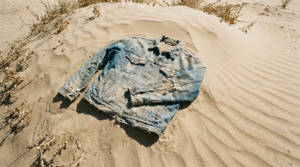
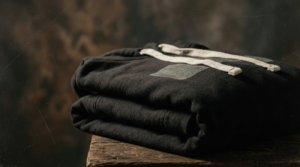
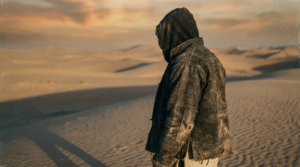
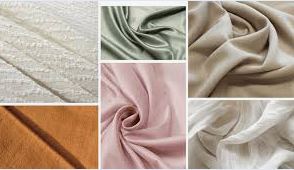
When we designed this jacket, we didn’t want it to look like it came out of a plastic wrapper untouched. We wanted it to look like it had a soul. By leaving the raw edges of our hand-loomed fabric exposed, we are allowing the material to speak for itself. We are letting the threads breathe.
Perspective: A perfect hem says, “I was made by a machine to look like everyone else.” A frayed edge says, “I was crafted by a human to look like nothing else.”
Controlled Chaos: It’s Not Just “Ripped”
There is a massive difference between a garment falling apart and distressed luxury fashion. The fraying you see on our jackets is calculated.
- The Stabilizing Stitch: Before we allow the edge to fray, we run a hidden stabilizing stitch just above the raw edge. This ensures that the fraying stops exactly where we want it to. The jacket looks distressed, but structurally, it is armored.
- Hand-Finishing: We manually tease out specific threads to create a texture that looks organic. A machine cannot replicate this randomness. It tries to create patterns; we create distinctiveness.
The Ultimate Sign of Human Touch
In the age of AI and automation, “perfect” has become cheap. You can 3D print perfect. You can laser-cut perfect. But you cannot automate the chaotic beauty of a hand-finished raw hem.
When you wear this piece, you are wearing the decisions of the tailor. You are seeing exactly where the loom stopped and where the garment began. It is raw, it is unfiltered, and it is undeniably human.
Conclusion
We don’t sell perfection; we sell character. If you want a jacket that looks exactly like 10,000 others, the mall is open. But if you want a piece that embraces the beauty of the raw and the unfiltered, you are in the right place.
Call to Action (CTA)
Embrace the imperfection. Join the few who understand the difference between damaged and distressed.
Shop the Limited Collection at https://sehra-e-khaas.com/